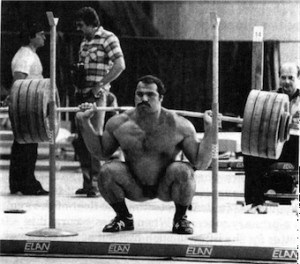
An excellent method to obtain steady progress in the squat is to alternate between front squats and back squats every three to four weeks. This strategy has the effect of ratcheting up anterior and posterior strength and muscular development in a complimentary fashion. This is only an approximate dichotomy as front squats are also conducive to developing the upper back, since to cave forward in the upper back during a front squat generally means dropping the weight and missing the lift.
Front squat emphasis: Quads, abs, mid and upper back
Back squat emphasis: Hamstrings, adductors, lower back, traps
Alternating at the three to four week interval tends to allow enough time to accumulate results in one of the lifts while avoiding the occurrence of repetitive stress injuries. If you’ve been predominately favoring one style of squatting over the other for a long time, you may want to switch to the opposite style for a longer run of six to eight weeks to balance the body and allow time for any inflammation, pain, etc., induced by the alternative style to resolve. After doing so, you could then settle into the recommended three to four week rotation schedule.
Think of repeatedly climbing a ladder using only one arm. That is roughly analogous to the inefficiency of chasing higher squat numbers without utilizing both primary variations in equal measure. Changing the style also keeps training mentally stimulating and adds a sense of urgency to pushing PRs before it’s time to rotate to the opposite style. Switch it up and crush plateaus.
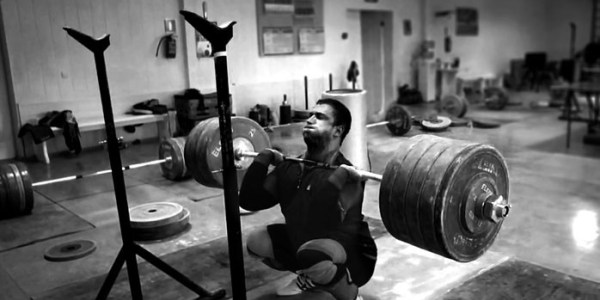
 Lifting & Winning